
Sent: The Road to 2033 · Part 1
Six and a half years
In 2033 the Church marks two thousand years since Jesus died and rose, and Pope Leo hopes to keep the anniversary in the room where the Church caught fire. Week 1 of Sent: The Road to 2033.

Shaun Austin · 5 min read
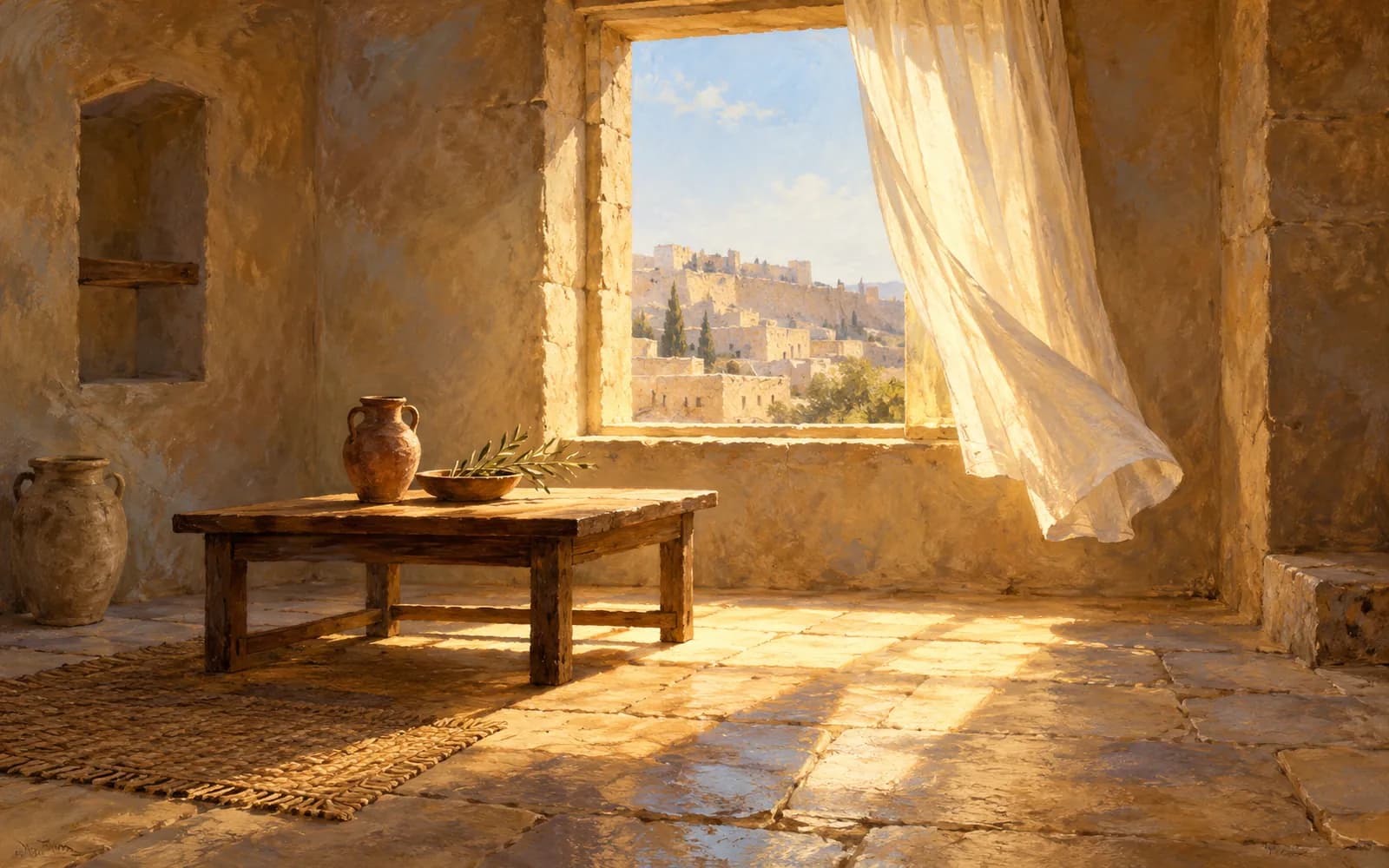
In 2033 the Church will mark two thousand years since Jesus died and rose, and Pope Leo hopes to keep the anniversary in the room where, tradition says, the Church began. I keep coming back to that room, because what happened in it is the reason any of us are here.
About a hundred and twenty people, praying, waiting for something Jesus had promised and none of them had yet seen. Ten days of that, by the Church's own reckoning. Then a sound like a rushing wind, and fire, and the same Peter who had sworn he did not know the man was on his feet in front of a crowd from every nation under heaven, telling them, in words each of them could understand, that the one they had crucified was alive. About three thousand were baptised by the end of the day. The Church did not grow out of a plan. It caught fire.
Jesus had said it would. "I came to bring fire to the earth, and how I wish it were already kindled!" Pentecost is that wish answered. So when the Pope asks the whole Church to walk back to that room together for 2033, I do not think he is inviting us to visit a holy site. I think he is inviting us to stand where the fire fell and ask for it again.
Pope Francis pointed to the anniversary when he proclaimed the last Jubilee. Pope Leo has called it the Jubilee of the Redemption, asked Christians of every tradition to make the journey together, and said where he hopes it will end: in Jerusalem, in that upper room. The document that fixes the jubilee's dates has not been published yet, but the anniversary does not depend on it. Easter 2033 is the 17th of April. Pentecost is the 5th of June. From this week, that is six and a half years, or 344 Sundays.
Six and a half years is long enough to change almost anything about any part of the Church, and short enough that the changing has to start now. Francis Xavier had ten and a half years in Asia. In the middle of them he wrote home from India that "many, many people hereabouts are not becoming Christians for one reason only: there is nobody to make them Christians", and that he had thought of going round the universities of Europe "crying out like a madman" to those "with more learning than charity". Catherine of Siena had thirty three years of life altogether, and used some of them to write to a young follower, Stefano Maconi: "If you are what you ought to be, you will set fire to all Italy." Neither of them had a strategy. Both of them had caught the fire.
Paul VI wrote fifty years ago that the Church "exists in order to evangelize." Her deepest identity, he called it. If that is true, then the question for every part of the Church, and I am asking it of myself first, is less whether we are keeping going and more whether anyone is meeting Christ because of us. John Chrysostom put it in a way I cannot get out of my head: "Nothing is more frigid than a Christian, who cares not for the salvation of others." It is a hard word, and he said it to his own congregation. Paul said it of himself: "woe to me if I do not proclaim the gospel!" And Pope Francis, in the document that should be on every parish council's table: "I prefer a Church which is bruised, hurting and dirty because it has been out on the streets, rather than a Church which is unhealthy from being confined and from clinging to its own security."
None of that is said against the people who keep the Church standing. Most of what happens in a parish from one year to the next is done by people who are tired and faithful and rarely thanked, and the Christmas Masses and the confirmation dates and the summer camp will all still need doing in 2033. But the Church has been handed a longer horizon than any of us are used to, and I think it would be a waste to plan the next six and a half years the way we planned the last one, around what we can keep, when the saints spent theirs around who they could reach.
Here is the encouraging part, and it is also the hard part. The fire is not ours to make. Pope Leo said it at the Pentecost Vigil last year: "Evangelization is always God's work." The apostles could not have manufactured Pentecost, and they did not try. They did the two things in their power. They stayed together, and they prayed. Then God did what only God does. That is still the whole of our part, and it is within reach of every parish, every community, every movement and ministry, and every person reading this. We cannot light the fire. We can ask for it, and we can stop standing where it cannot reach us.
So here is the question I am carrying into this series, and I am asking it of myself before anyone else. If ten days in an upstairs room was enough to turn a hundred and twenty people at prayer into a Church, what would six and a half years do to any part of the Church that asked for the fire and meant it?
Every Tuesday until Easter, in a series I am calling Sent: The Road to 2033, I will write about one of the people in that room, or one of the men and women since who caught what they caught, and about what it might look like for the people who carry the Church's work, in any part of it, to take the next six and a half years seriously. Some of it will be hard to hear. All of it is meant as encouragement, because I believe the Spirit who came into that room has not changed his mind about us.
344 Sundays. Put the date somewhere you will see it, and ask for the fire.